Want to be in the loop?
subscribe to
our notification
Business News
THE GOVERNMENT HAS ISSUED THE DECREE (NO.118) TO GUIDE THE IMPLEMENTATION OF THE INVESTMENT LAW
1. New requirement for the making of a security deposit by investors to guarantee the obligation to carry out certain investment projects where land is allocated or leased by the State.
This is new and previously applied only to large infrastructure BOT type projects. It is now a general requirement where land is involved. There are some exceptions.
For example, it does not apply if: the investor secured the land via an auction and a lump sum payment has been made for the land for the entire term; the investor is selected via a tender process.
The security deposit must be paid into the bank account of the relevant licence issuing authority.
The amount is 1%, 2% or 3% of the investment capital of the relevant project depending on the size:
- 1% in respect of projects with investment capital above 1,000 billion VND;
- 2% in respect of investment projects with investment capital from above 300 to 1,000 billion VND;
- 3% in respect of projects with investment capital of up to 300 billion VND.
The amount can be reduced 25% or 50% depending on whether the project is in an 'encouraged' or 'specially encouraged' sector or geographical area per the lists attached to Decree 118.
If the investor has advanced payment for land clearance and resettlement, such amount may be set off from the deposit.
50% is returned when all land formalities and documents to enable construction to start are completed. The remaining amount is returned when the construction works are commissioned to commence operation.
The deposit will also be returned in the event of force majeure or other circumstances as agreed with the relevant licence issuing authority.
Thus, due care should be given to the negotiation of the security deposit agreement.
2. Investment protection in the event of change-in-law
If new laws contain better incentives, investors are entitled to the more favourable incentives.
If news laws are less favourable, investors may continue to enjoy incentives already granted to them.
If investors lose incentives due to change-in-law for national security, environmental protection or social reasons, they will be compensated in one of the following ways:
- damages suffered may be set off against taxes payable;
- the objectives of their projects may be changed;
- assistance may be provided to remedy the damages.
The above is a watered down version of the investment guarantee under the old law which included monetary compensation.
Investors have a 3-year limitation period from the date the new law(s) come(s) into effect to make a claim.
3. Vietnamese language documentation is required for all documents submitted to the licence issuing authority and it is the main language to carry out investment formalities.
Thus, if there are discrepancies between the Vietnamese and foreign language versions, the authorities may rely solely on the Vietnamese versions.
This is not new but often foreign investors do not pay careful attention to the Vietnamese versions.
4. Decree 118 provides for the creation of a National Information Gateway on Foreign Investment which is an electronic data information gateway for issuance and amendments of Investment Registration Certificates, for the publication and updates on laws and policies relating to foreign investment as well as for the announcements and updates on foreign investment policies.
Vietnam does not yet have a company registrar and any system to carry out company searches. This along with the creation of a National Company Registrar is long overdue.
5. The Government, for the first time, specifically states that licence issuing authorities are not allowed to request investors to provide any additional documents other than as set out in the Investment Law and Decree 118.
This will reduce the amount of discretion and delays in the licensing process.
Decree 118 also allows licence issuing authorities only one chance to request investors to amend or supplement their application files for licences.
6. Decree 118 also sets out procedures for licensing of 'conditional' foreign investment projects. Conditions may include:
- foreign ownership cap in certain types of Vietnamese companies;
- form of investment;
- scope of investment activities;
- the types of Vietnamese partners that may participate in the investment activity(ies);
- other conditions as set out in laws, decrees and treaties in which Vietnam is a signatory.
The Ministry of Planning & Investment will spell out the details of which types of projects and what conditions are attached to them.
Those holding dual Vietnamese nationalities and foreign nationalities may choose to invest as a domestic or foreign investor.
7. Decree 118 also sets out the usual details on procedures to issue and amend licences.
8. Note that a licence will be withdrawn if an investor fails to or cannot carry out the project within 12 months from the date(s) in the registered implementation schedule and has not received approval to suspend the project. A licence may also be withdrawn based on a court judgment or arbitration award. This is interesting as arguably shareholders in dispute can request a judge or arbitrator to have the investment licence withdrawn.
Decree 118/2015/ND-CP dated 12 November 2015 (valid 27 December 2015)
DN Legal, 9 December 2015 (www.daonguyenlegal.com)
Related News

BANKING / FINANCE / INSURANCE / TAX
REMITTANCES TO HCM CITY RISE NEARLY 40% IN Q3
Remittances to HCM City reached more than US$2.83 billion in the third quarter of this year, up 39.5 per cent from the previous quarter and 3.6 per cent year-on-year. This was the first quarter showing positive annual growth this year, helping narrow the decline in remittance inflows over the first nine months. According to the State Bank of Vietnam (SBV)’s Regional Branch 2, remittances transferred to HCM City through credit institutions and economic organisations totalled $2.835 billion in Q3, an increase of more than $802 million from the previous quarter.

TECHNOLOGY
TECH SECTOR GROWTH OPENS UP OPPORTUNITIES FOR VIỆT NAM TO GO GLOBAL
The growth of the electronics, semiconductor and high-tech sectors worldwide is opening up a variety of opportunities for Vietnamese enterprises to integrate more deeply into the global supply chain. However, to become suppliers for these corporations, domestic enterprises must meet rigorous standards regarding quality, technology, productivity and order fulfilment capabilities.
VIETNAM ECONOMY INVESTMENT
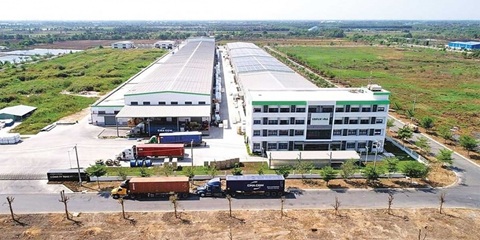
FOREIGN INVESTORS SEEKING A SYNCHRONISED MANUFACTURING ECOSYSTEM
Instead of focusing only on land costs and incentives as usual, foreign investors are seeking a synchronised manufacturing ecosystem, from stable power supply and logistics to shared infrastructure and the convenience of completing residence procedures for experts to serve their long-term investment in the country.
MEMBER CORNER / PROMOTIONS
SENTRYSAFE FHW40200 – PROTECT YOUR VALUABLES, ENJOY PEACE OF MIND!
Looking for a reliable solution to protect your important documents, cash, and valuables from fire and water damage? Genuine SENTRYSAFE - Reliable protection for your valuables and peace of mind! Contact Sen Wai Vietnam for more information and personalized product recommendations.
PROPERTY / INDUSTRIAL ZONE
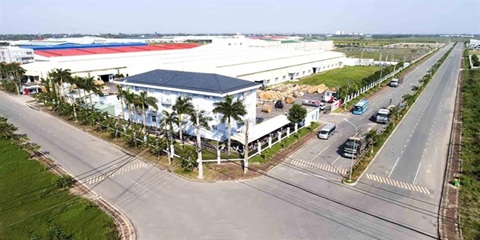
HCM CITY ATTRACTS US$5.7 BILLION INTO EXPORT PROCESSING AND INDUSTRIAL ZONES
HCM City attracted US$5.7 billion in domestic and foreign investment into its export processing and industrial zones during the first nine months of 2026. The figure exceeded the city's full-year target by 31 per cent, highlighting strong momentum in high-quality industrial investment under Resolution No.10-NQ/TW. Total investment reached 131 per cent of the 2026 target of $4.25 billion and represented a 29 per cent increase compared with the same period in 2025, according to the city's Export Processing and Industrial Zones Authority (HEPZA).
INFRASTRUCTURE / CONSTRUCTION / LOGISTIC / PORT
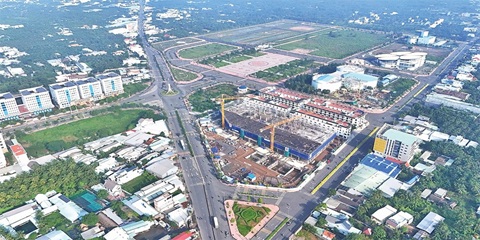
DONG THAP PROVINCE STEPS UP INDUSTRIAL EXPANSION AND INFRASTRUCTURE CONNECTIVITY
Accelerating public investment, strengthening inter-regional connectivity, and expanding industrial land are helping Dong Thap efficiently bolster competitiveness and drive economic growth. Following the 2025 merger of the former Dong Thap and Tien Giang provinces, the expanded Dong Thap province in the Mekong Delta faces mounting pressure to accelerate infrastructure development and strengthen connectivity among local economic zones, urban areas, industrial parks (IPs), and production centres.
Events Sponsors






















